BPE Tokenizer in Java
Date
Category
Java
Why I Built a BPE Tokenizer from Scratch (and You Should Too)
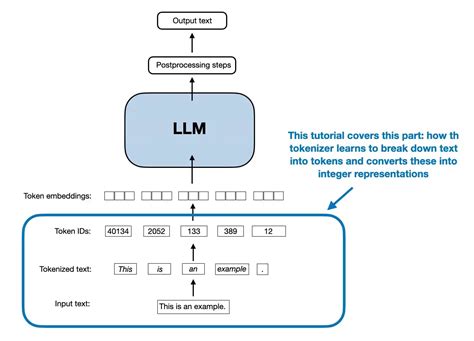
In the era of HuggingFace and Tiktoken, it is tempting to treat tokenization as a "solved problem"—a black box that turns strings into integers. But while building my recent AI expertise, I decided to ignore the libraries and build a Byte-Pair Encoding (BPE) tokenizer from the ground up in Java.
I would say it is a really fun experience that I am having right now, and it is making me a better engineer.
1. The "Black Box" Problem
Most developers treat Large Language Models (LLMs) like magic. However, a model is only as good as its vocabulary. By building the BPE logic myself, I had to confront the OOV (Out-Of-Vocabulary) problem head-on. I learned exactly how subword units bridge the gap between character-level and word-level processing, ensuring the model never "runs out of words."
2. Mastering Data Structures & Memory
Implementing BPE isn't just about mathematics; it’s about efficiency.
The Challenge: Frequency counting across millions of pairs.
Optimization: Crucial when it comes to string manipulation.
The Solution: I used optimized HashMaps and PriorityQueues to find the most frequent adjacent byte pairs.
Implementing this in Java forced me to think about memory overhead and computational complexity—concerns that we forget when you simply call .encode().
3. Logic Over Libraries
When you use a library, you learn an API. When you build the logic, you learn a System. Writing the merge rules and the recursive encoding process gave me a visceral understanding of how information density works in LLMs. It turned a theoretical CS concept into a concrete, debuggable reality.
4. Why You Should Build One Too
If you aspire to be a Product Engineer or a Systems Architect, you must prove you can survive without a safety net. Building a tokenizer from scratch is a "rite of passage" that demonstrates:
Resourcefulness: You can implement research papers into working code.
Precision: You handle edge cases (like whitespace and special tokens) that libraries usually "magic away."
Performance Awareness: You see exactly where the bottlenecks are in the AI pipeline.
The Takeaway
Don't just be a consumer of AI; be an architect of it. Building the foundational components—the tokenizers, the optimizers, the loss functions—is what separates a "coder" from an "engineer."
Check out my BPE implementation on my GitHub to see the raw logic in action! 🚀